In the Classroom and on the Podium: Insights from Prof. Mary Roberts
Professor Mary Roberts has been the first Royden B. Davis Visiting Professor in the Humanities at the Georgetown Humanities Initiative and the Department of Art and Art History.
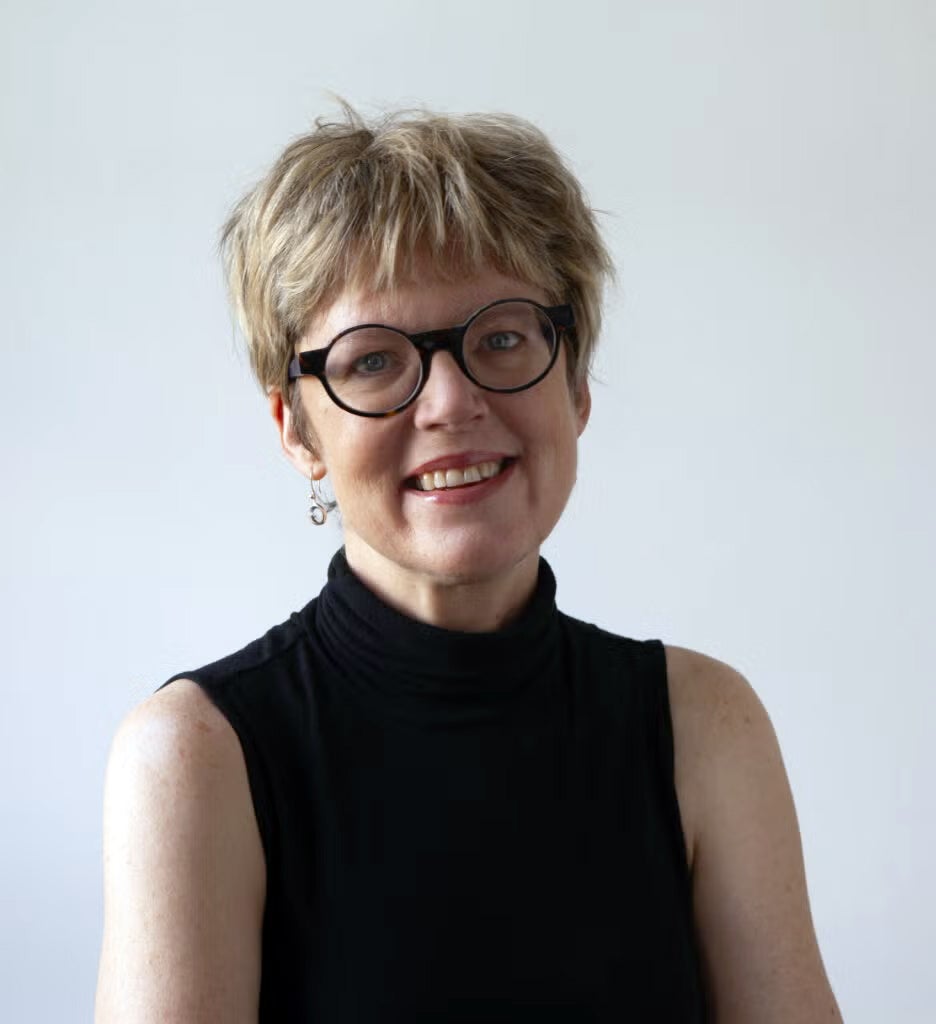
During her residency in AY 2025-2026, she taught the course “Ottomans and Orientalists, 1798-1910” and gave a plenary talk on visual translation in the works of Constantin Guys. To mark the conclusion of her residency, we present a conversation between Professor Roberts and her students Catie Higgins, M.A.’26 (Art & Museum Studies) and Audrey Kalb, B.A. ’26 (Art History, Theology and Catholic Studies minor), as well as highlights from her lecture and reflections on her work in the humanities.
Catie: Professor Roberts, can you tell us how you got interested in Ottoman art and Orientalism? How do you feel your work is advancing this field of study?
Mary: I first became interested in debates around feminism and Victorian art as an undergraduate at the University of Sydney, where I studied with Professor Robyn Cooper. My interests gradually shifted towards Orientalism. This was the time when Edward Said’s book Orientalism was having a profound impact across the humanities, including in art history. I was particularly interested in how women related to this discourse. I became fascinated by Victorian women who traveled to the Middle East and, because of their gender and connections within diplomatic circles, could visit the harems of the Ottoman elite in Cairo and Istanbul. They wrote about their experiences in their published travelogues. I was questioning how gender intersected with Orientalism. At the same time, conversations were emerging around Ottoman women’s lives and the difficulty of researching them because few left written records. Photographs and portraits, however, provide important insights into gender in the Ottoman world. This led to my first book, Intimate Outsiders. The Harem in Ottoman and Orientalist Travel literature. From there I became interested in Istanbul as a major site of artistic exchange because of the extraordinary cultural diversity of artists in that city, this was the focus for my second book, Istanbul Exchanges: Ottomans, Orientalists, and Nineteenth-Century Visual Culture. To address your question about the ways in which I’ve advanced the field, I was initially interested in this question of “speaking back.” My edited volume Orientalism’s Interlocutors built on emerging work in nineteenth-century Ottoman studies, including scholarship by Zeynep Çelik and others, to explore not only Orientalism as the West’s power over the East through discursive structures, but also how the Ottoman world, particularly Ottoman elites, disrupted some of those Western Orientalist fantasies or assumptions. Since these earlier debates I have continued to explore the role of visual culture in all sorts of complex forms of contact and exchange between the Islamicate world and Euro-America in the nineteenth century.
Audrey: How has this position at Georgetown allowed you to advance your research?
Mary: My work is very interdisciplinary, and being hosted this year by the Humanities Initiative and the Art and Art History Department at Georgetown has provided an invaluable opportunity to engage with colleagues across campus with whom I share a whole range of intersecting interests. While at Georgetown, I have completed the manuscript of my next book—Four Thresholds: Modernity, Islamic Art, and the Orientalist Interior—which is forthcoming with the University of Chicago Press. I also commenced work on my new research project, which is a study of artists who worked across the Middle East for the illustrated newspapers. I am interested in the ways in which drawing became a media technology in this period and the processes of visual translation as these drawings traveled from sites across the Middle East and were transformed into prints for the illustrated newspapers in European cities from London to St Petersburg. The range of dialogues with scholars here have been excellent for advancing this new collaborative project which is funded by a three-year Australian Research Council grant. My public lecture on April 14 addressed these questions of visual translation and the emergence of modernism through a study of Charles Baudelaire’s writings and Constantin Guys’ drawings made in Istanbul and at the Crimean War between 1853 and 1855. One of the great pleasures of my time here has been the dialogues with students at Georgetown, especially through the course I taught in the Fall 2025 semester, “Ottomans and Orientalists, 1798-1910.” It was designed to appeal to students from a range of disciplines. We began with methodological readings, starting with Edward Said and moving toward concepts like Ottoman Orientalism, nesting Orientalisms, and questions of cosmopolitanism. Our class visited the Textile Museum at George Washington University to see some of the historic Ottoman clothing that we were studying. On Georgetown’s campus we had a wonderful session in the printmaking studio with Professor Scip Barnhart, examining the material processes of lithography as we were discussing its adoption in early nineteenth-century Iran. One thing I have especially enjoyed at Georgetown is the emphasis on open dialogue in the classroom. But I’d love to hear from you what you found stimulating about the course and how it connected with your previous studies?
Audrey: After taking about eleven courses across the Department of Art History, this class has felt like a meaningful way to conclude my studies before graduating. It brings together multiple geographic regions and time periods, which highlights the breadth of art history at Georgetown. As I prepare to go on to law school, I appreciated how the course offered such a holistic perspective and tied together many of the themes I’ve encountered throughout my studies. I also valued the flexibility you gave us in choosing topics for our final presentations—I was able to approach art history from a legal perspective, examining Ottoman antiquities legislation, which made the project especially meaningful for me.
Catie: As a museum studies student, I’ve really appreciated the balance between art history and material culture in the course. I developed an interest in Islamic art largely through independent research, so having the opportunity to study it formally in the classroom has been incredibly valuable. I feel very lucky that our paths crossed while we were both at Georgetown. The course’s interdisciplinary approach, especially its emphasis on geography and different forms of visual and material culture, has really broadened my perspective.
Mary: That’s something we’ve touched on a lot. One goal was to create an intermedial course that didn’t look at photography, architecture, or painting in isolation, but instead addressed the conjunction of these different mediums. For example, we examined political caricatures from the Ottoman world in the 1870s and 1880s and then thought about them in relation to the development of the Ottoman-German railway alliance and other forms of visual culture, including textiles. We didn’t study painting until about week six. Instead, we began with topics like city planning and concepts of time. This approach gave us different inroads into the debates about Orientalist visual culture through a broad framework. In Ottoman culture, architecture and the book arts often held greater prominence than easel painting, so in shifting geographies, you oftentimes also shift media.
Audrey: What do you hope students take away from the course beyond the specific artworks we’re focusing on?
Mary: I hope students carry forward insights through the methodological questions we’ve explored: What is cosmopolitanism? Who is being represented and how are they represented in visual culture? How does Ottoman Orientalism complicate the conversation about Orientalism? How do we think critically about the role of visual culture in cultural exchange and contact? These are the sort of questions I hope you carry forward into other areas of your scholarly inquiry and perhaps your museum work, and what it means to look at a range of voices in any given context. What were some of the takeaways for you?
Audrey: One thing that struck me was how multifaceted a region can be visually. A week that stood out to me was our discussion of time. I had always assumed time was standardized, but learning that the Ottomans operated with multiple systems of time made me realize how historically contingent something so basic can be.
Catie: One of the things I found to be most interesting about the course was how cross-cultural the Ottoman world was—situated at the center of the imagined “East” and “West” and spanning three continents. There was so much exchange happening, especially in the later Ottoman period as the empire began to decline. Earlier in my studies, I encountered literature that analyzed colonialism and its impact on the decorative arts, but this course has shown how much more complex those exchanges were. The idea of Ottoman Orientalism especially broadened my perspective: while the Ottomans were perceived as the “other” by the West, Ottomans themselves also “othered” different groups within their own empire.
Catie: Lastly, what gaps do you see in the field currently and are there areas specifically that you hope new scholars might take up in the future?
Mary: It’s an exciting moment because historians of Islamic art are increasingly turning to the nineteenth century. The heartland of the field of Islamic art studies has long been in the medieval and early modern periods. More recently there has been a more energetic focus on the 19th century and questions of modernity. Scholars are also expanding their inquiry geographically, looking beyond the traditional centers of Islamic art history. These approaches highlight geographic and conceptual frontiers within the subfield but also the interconnectedness of the subfields within our discipline across the globe. The field is morphing in all sorts of exciting ways. My current project involves working with emerging scholars in Turkey, the US, the UK, France, and Australia to examine how the visual representation of the Middle East in the news media was developing in the 19th century and the role of artists within that context. Before photography was agile enough to become the main visual media for news reporting, artists often worked on location and sent drawings back to printmakers in London or elsewhere. Understanding that process opens new ways of thinking about how visual representations of the Middle East circulated globally.
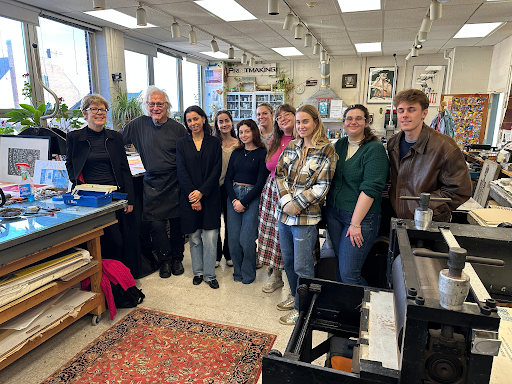
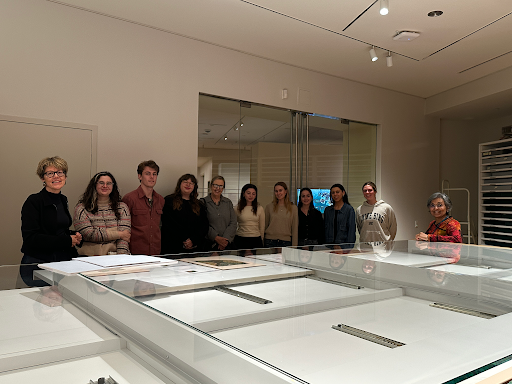
Photos: (L) Prof. Roberts’s class learning about lithography from Prof. Ship Barnhart (R) Ottomans and Orientalists class at The George Washington University Museum and The Textile Museum.
On April 14, 2026, Prof. Roberts delivered the plenary lecture “Charles Baudelaire, Constantin Guys and the Politics of Visual Translation.”
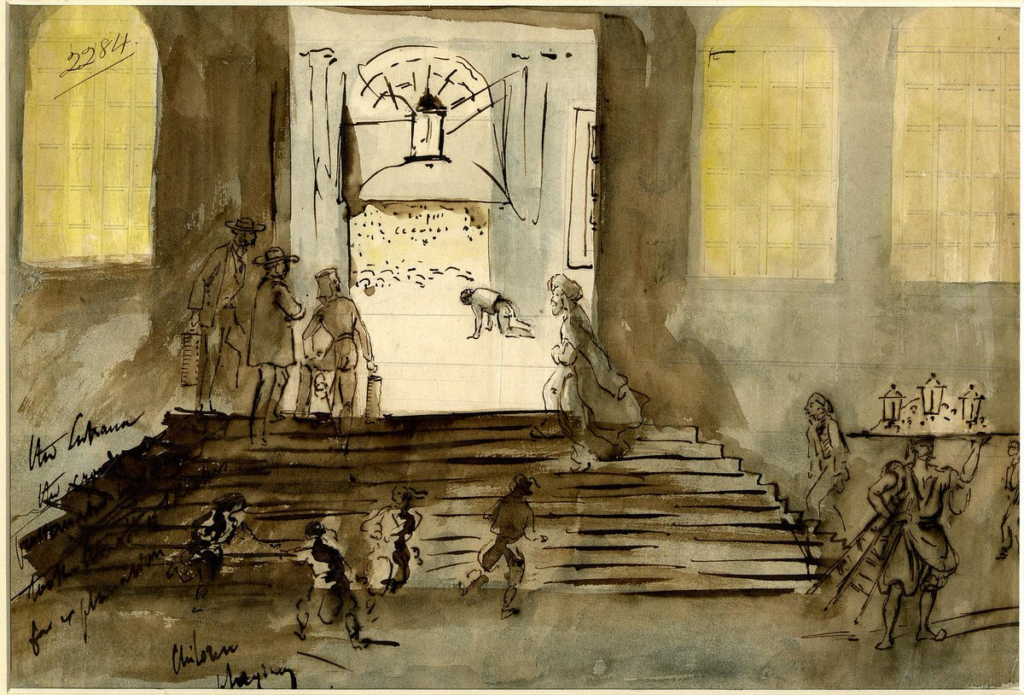
Baudelaire’s flâneur is firmly entrenched in our histories of nineteenth-century art as one of the pre-eminent figures of the Parisian modern artist. And yet a consensus has emerged that the writer, essayist, and art critic backed the wrong horse in writing about Constantin Guys as the exemplary flâneur and painter of modern life, rather than Édouard Manet or other more famous French modernists. Prof. Roberts contended that Baudelaire’s conception of the artist as convalescent is a less familiar, but no less significant, avatar of modernity, and that this figure emerges through Baudelaire’s analysis of Guys’ drawings that were made, not in Paris, but in Istanbul and the Crimea. The lecture I analyzed Guys’ drawings made on the Crimean battlefront and at the public gardens, street corners, cafés, mosques, and hospitals of Istanbul. Equally, it traced the transformation of these drawings into prints for the Illustrated London News. Attending to the international politics of such visual translation, Prof. Roberts elaborated on both the historical and art-historical significance of Guys’ war reporting. Guys’ drawings emerge as a fulcrum between Baudelaire’s modernism, Victorian news media, and Ottoman statecraft. Modern art, in turn, is rooted in transnational encounters.
We are grateful to Professor Roberts for her many contributions to our community and hope that this marks the beginning of an enduring scholarly collaboration.