Steven Minz, “AI and the Future of Teaching: What These Tools Make Possible—and What Institutions Must Do”
The Georgetown Humanities Initiative partnered with the Center for New Designs in Learning and Scholarship to invite History Professor Steven Minz (UT Austin) as a plenary speaker at the 2026 Teaching, Learning & Innovation Summer Institute.
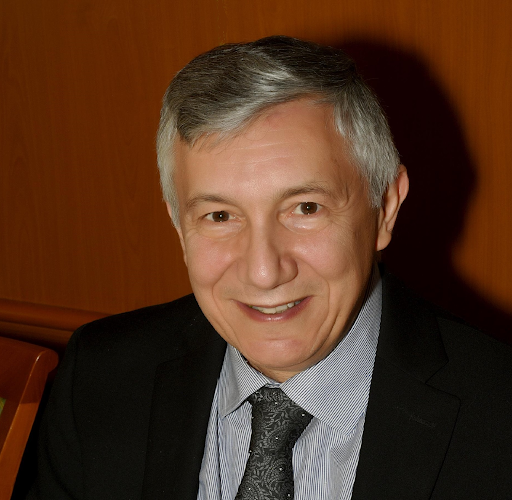
On May 19, 2026, Prof. Minz delivered the thought-provoking lecture “AI and the Future of Teaching: What These Tools Make Possible — and What Institutions Must Do.” Starting from the premise that higher education’s response to artificial intelligence has been largely defensive—focused on detection and restriction––, he argued that AI is not the problem. It exposes problems we have long ignored: we identify learning gaps too late and intervene too little; students receive minimal, often delayed feedback; and too many graduates unable to build or critique a serious argument. Used well, in his view, AI is not a threat to rigor—it is one of the best tools we have to restore it. The difference lies in how it is used. As a ghostwriter, AI replaces thinking. As a Socratic interlocutor—questioning assumptions, demanding precision, surfacing counterarguments, and exposing weak reasoning—it deepens thinking.
Prof. Minz presented practical ways to use AI to strengthen student learning and closed with a clear institutional agenda: redesign teaching around what AI now makes possible—timely, detailed feedback, explicit instruction in argumentation, and assessments that require real-time judgment.
Steven Mintz is the author or editor of 17 books, including The Learning-Centered University: Making College a More Developmental, Transformational, and Equitable Experience. A leading authority on families, the life course, and higher education’s past, politics, and future, he has also been a prominent voice in advancing more engaged, student-centered learning. He directed the University of Texas System’s Institute for Transformational Learning and Columbia University’s teaching center, and has held leadership roles as president of the Society for the History of Children and Youth and H-Net, as well as chairing the Council on Contemporary Families. A fellow at Stanford and visiting scholar at Harvard, his widely read public writing in Inside Higher Ed, The Chronicle of Higher Education, and Substack advocates for more active, project-based, and relationship-rich education.