What Makes Us Human in the Age of A.I. Fall 2025 Events: De Kai, Bruce Schneier and Nathan E. Sanders
The interdisciplinary event series “What Makes Us Human in the Age of AI?”—an ongoing collaboration between Georgetown Humanities Initiative and the Center for Digital Ethics– featured two major events that highlighted the role of intrinsically human attributes and of the humanities in facing the challenges of the latest digital and technological revolution.
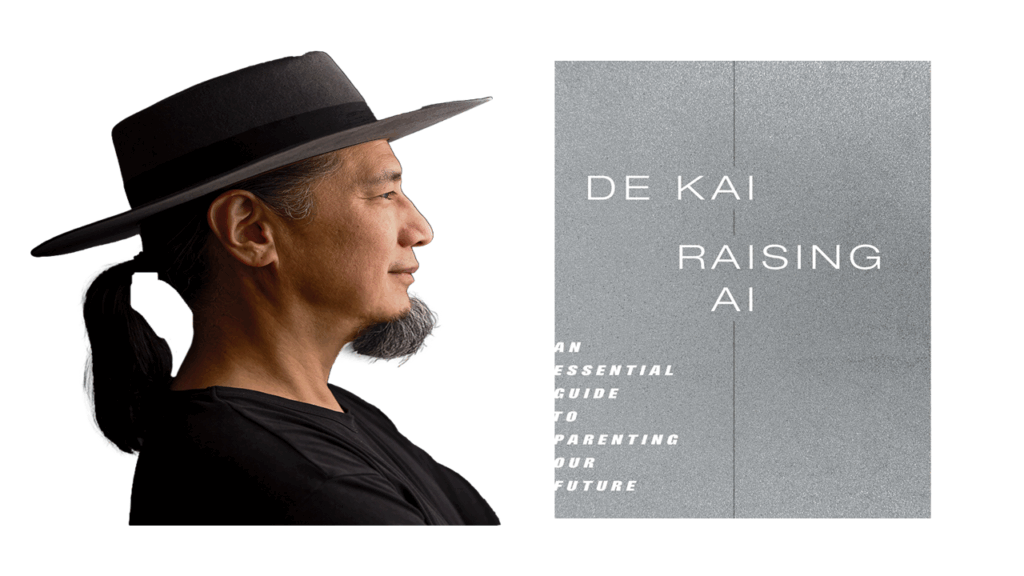
On October 15, 2025, the world-famous computer scientist De Kai (Professor of Computer Science and Engineering at Hong Kong University of Science and Technology and Distinguished Research Scholar at Berkeley’s International Computer Science Institute) discussed his 2025 book Raising AI: An Essential Guide to Parenting Our Future and engaged in a stimulating conversation with Professors Laura DeNardis (Endowed Chair in Technology, Ethics, and Society and Director of the Center for Digital Ethics) and Edward Maloney (CNDLS Executive Director and Professor of English).
You can learn more about the event at the following links:
On November 19, 2025, authors Bruce Schneier and Nathan E. Sanders discussed their book
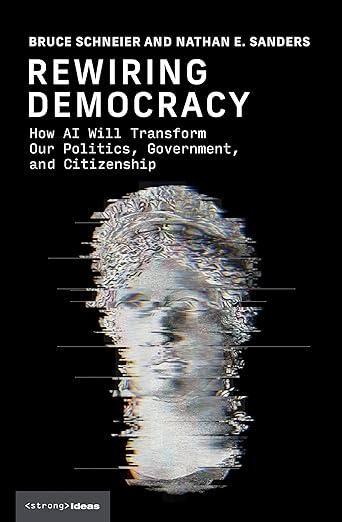
Rewiring Democracy: How AI Will Transform Our Politics, Government, and Citizenship, addressing “how AI will alter every facet of democracy, and how to harness the technology to distribute rather than concentrate power.” The event was moderated by Director of the Center for Digital Ethics, Prof. Laura De Nardis.
Bruce Schneier is an internationally renowned security technologist and the New York Times bestselling author of fourteen books, including Data and Goliath and A Hacker’s Mind. He is a Lecturer at the Harvard Kennedy School, a board member of Electronic Frontier Foundation, and Chief of Security Architecture at Inrupt, Inc. He also writes about security issues on his site schneier.com.
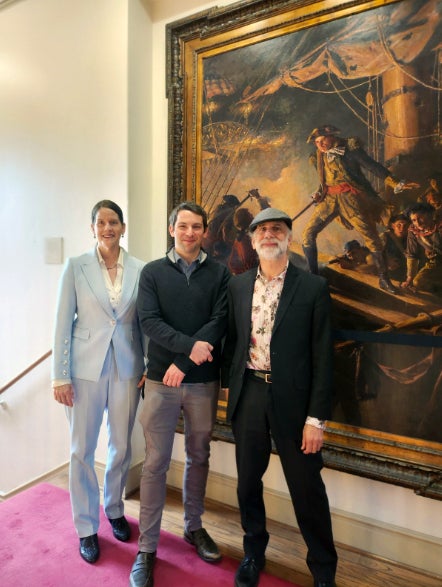
Nathan E. Sanders is a data scientist focused on making policymaking more participatory. His research spans machine learning, astrophysics, public health, environmental justice, and more. He has served in fellowships and the Massachusetts legislature and the Berkman-Klein Center at Harvard University. His writings on AI and democracy can be found in publications like The New York Times and The Atlantic and at his website, nsanders.me.